Impoundment Control Act (ICA)of 1974 & Richard Nixon’s Attempt to Reign in Government Spending

Atomic Truth
March 6, 2025
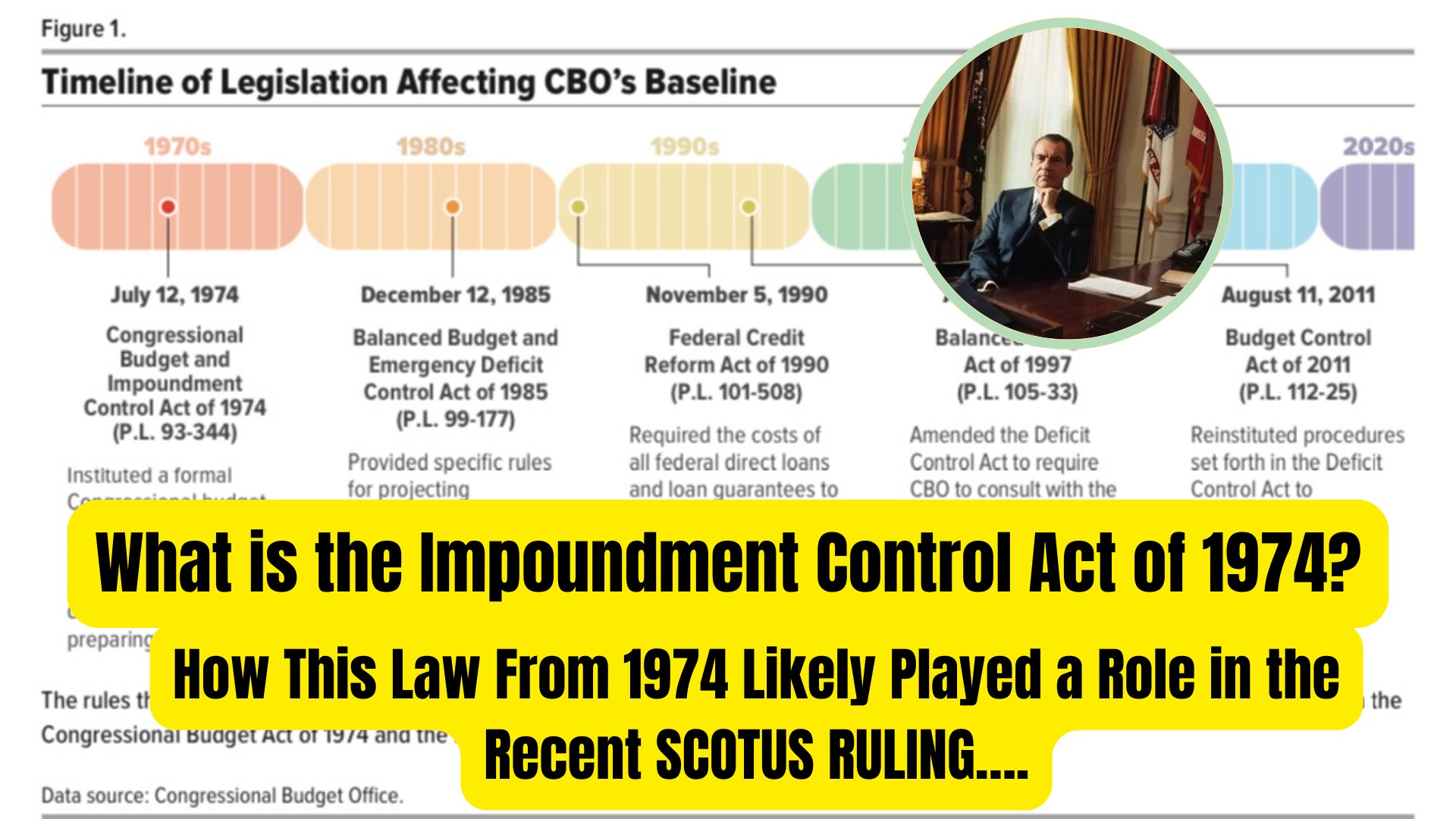
ICA of 19743/5/2025: The Supreme Court has ruled in a 5-4 ruling, upholding the lower court’s decision to force the release of nearly $2 billion in foreign aid.
Business insider reports:
“Justice Samuel Alito, in his dissenting opinion, wrote that he was "stunned" by the court's decision that ultimately forces the Trump administration to pay out the billions to USAID contractors.”
“Does a single district-court judge who likely lacks jurisdiction have the unchecked power to compel the Government of the United States to pay out (and probably lose forever) 2 billion taxpayer dollars? The answer to that question should be an emphatic 'No,' but a majority of this Court apparently thinks otherwise. I am stunned," Alito wrote in his dissenting opinion.
The opinion was joined by Justices Clarence Thomas, Neil Gorsuch, and Brett Kavanaugh.
There are a couple things that come to mind with this decision. First; Amy Coney Barrett has turned out to be a disappointment. Her logic and reasoning has been easy to sway, one way or another, and seems to side with the liberal end of the court, quite often. Second; the ICA, the Impoundment Control Act of 1974, probably played a role in this decision. We will get into that, in greater detail, next. Third; what is our recourse for funds that have been allocated that are likely being used in fraud, waste and abuse?
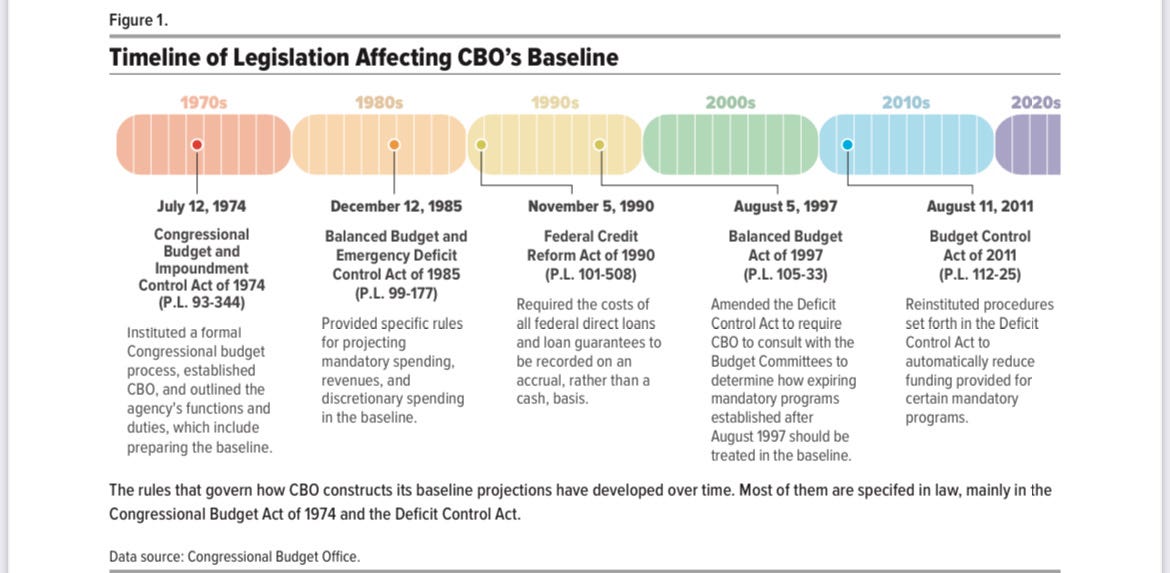
The Impoundment Control Act of 1974(ICA) was a significant piece of legislation that reasserted Congress's power of the purse and curtailed the president's ability to impound, or withhold, congressionally appropriated funds. This act was a direct response to President Richard Nixon's extensive use of impoundment, which many in Congress viewed as an abuse of executive power.
Historical Context and Legislative Background
Impoundment is the act by a President of the United States of not spending money that has been appropriated by the U.S. Congress. Thomas Jefferson was the first president to exercise this power in 1801, and it was regarded as an inherent power of the office, although one with limits. Over the years, many presidents followed Jefferson's example, refusing to spend funds when they felt that Congress had appropriated more than necessary. However, the practice reached a contentious point during the Nixon administration.
President Nixon frequently used impoundment to withhold funds for programs he opposed, leading to significant conflicts with Congress. One notable instance was in 1972 when Nixon attempted to impound funds for an environmental project, which Congress had previously overridden his veto to fund. This action, along with other high-profile impoundments, led to a legal challenge that reached the Supreme Court in the case of Train v. City of New York (1975). The Supreme Court ruled unanimously that Nixon did not have the authority to withhold the funds, stating that the president "did not have the authority to refrain from spending the money"
The Impoundment Control Act of 1974
In response to Nixon's actions, Congress passed the Congressional Budget and Impoundment Control Act of 1974. The Act, particularly Title X, known as the Impoundment Control Act, established procedures to prevent the President and other government officials from unilaterally substituting their funding decisions for those of Congress.
Key provisions of the Act include:
1. Rescission Process: The president may propose the rescission of specific funds, but this must be approved by both the House of Representatives and the Senate within 45 days of continuous session. If Congress does not approve the rescission, the funds must be spent
2. Deferral Process: The president can defer the spending of funds for up to 45 days while awaiting a response from Congress. However, if Congress does not agree to the deferral, the funds must be released
3. Congressional Budget Office (CBO): The Act created the Congressional Budget Office to provide independent analyses of budgetary and economic issues to support the congressional budget process
4. Budget Committees: The Act established the House and Senate Budget Committees to oversee the budget process and ensure that Congress's fiscal decisions are consistent with its budget resolution
Impact and Controversies
The ICA effectively removed the president's power to indefinitely reject congressionally approved spending. It reasserted Congress's constitutional role in the budget process and provided a clear framework for the executive branch's spending obligations. However, the Act has not been without controversy.
Some critics argue that the ICA unduly restricts the president's ability to manage the budget, particularly in areas of military and foreign affairs. They contend that prior to Nixon, almost every American president had engaged in impoundment, and the practice was almost universally regarded as legal. The ICA, they argue, undid nearly two centuries of constitutional practice.
Conclusion
The ICA has been a focal point in recent political debates, particularly during the Trump administration. In 2019, the Government Accountability Office (GAO) found that the Trump administration had violated the ICA by withholding $214 million in security funds intended for Ukraine. The GAO ruled that the Office of Management and Budget (OMB) had withheld the funds for an unauthorized reason, in violation of the Act.
This comprehensive overview highlights the historical context, legislative details, and ongoing significance of the Impoundment Control Act of 1974, particularly in relation to President Richard Nixon's actions and their lasting impact on the balance of power between the executive and legislative branches of the U.S. government.
I am still left with the question; what is our recourse for funds that have been allocated that are likely being used in fraud, waste and abuse? Perhaps it’s time to axe the ICA. A president cannot properly reign in excess spending and implement an agenda with such limitations; especially when the funds being allocated are likely involved in a funding scheme of corruption.
What do you think? 💭 🤔As always, can’t wait to hear your thoughts!
Sources
CBO - “CBO Explains the Statutory Foundations of Its Budget Baseline” https://www.cbo.gov/publication/59208
Wikipedia- “Congressional Budget and Impoundment Control Act of 1974” https://en.m.wikipedia.org/wiki/Congressional_Budget_and_Impoundment_Control_Act_of_1974
Business Insider - “Alito says he's 'stunned' the Supreme Court ruled against Trump over USAID's funding” - https://www.businessinsider.com/justice-alito-stunned-supreme-court-ruled-against-trump-usaid-funding-2025-3
An onerous government bureaucracy cannot exist without a complicit group of elected officials that use the power given to them by the people to perpetuate said bureaucracy.